Logline and synopsis.
The film MEDUSA is a result of the filmmaker’s quest for the Mother Goddess from the Neolithic cultures on the island of Sicily, where her culture thrived for eons of time.
This being said, the director’s hand seemed to be guided by something or someone else during the making process, resulting in the fact that no Neolithic artefacts were included in the final work, even though Neolithic caves and other archaeological findings on the island were filmed especially for this purpose. In the process of the film’s making it became clear that the Mother Goddess is very much alive in the here and now – she ‘simply’ jumped forward from the edit.
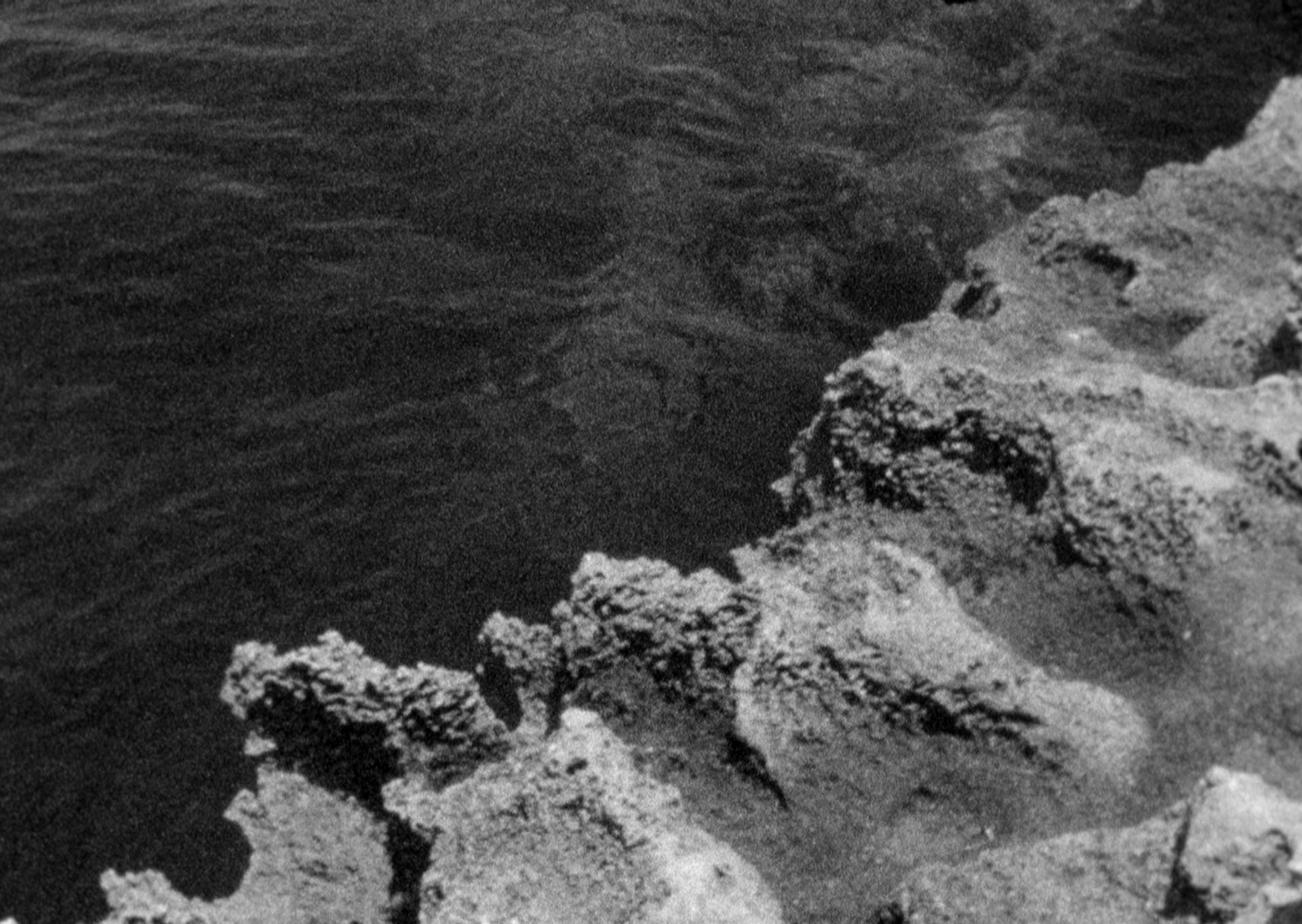
The camera slowly moves from the sky downwards into the sea, shifting from an observational stance towards a more undulating, chaotic, sensuous world and experience.
It was only later that Boon realized that this movement follows the trail of the ‘King Tiger’, mentioned in the ancient phrase from Taoist philosophy: ‘The King Tiger descends from the mountains into the valley of the people to drink from the river’. This is symbolizing the practice of ‘Inner Alchemy’: the mastering and creation of life energy within the human body, making use of the male and female energies in the universe. From this take, the sky is the abode of God or male energy and the sea the realm of the Goddess or female energies.
Taoist practice and philosophy is said to be more than 20.000 years old.
As mentioned before, this version was not intended as the final form for the film, but the director’s hand seemed to be guided by something or someone else during the making process..
Director’s statement.
Channa Boon is a visual artist, performer and filmmaker, living in The Hague, The Netherlands.
Boon’s work investigates in what way the human or non-human body relates to and intervenes with space, objects, architecture and sound. Investigating specific fictional or true stories and demographic data, Boon works with the ‘Acoustic Body’, a phenomenon she coined and accounts of through her work.
More background: a Feminist library from the 70-ies.
Medusa is both the Italian and Greek name for jellyfish and in Greek mythology a beautiful priestress that resided once in Athena’s Temple. The Sea God Poseidon fell in love with her and raped her, thus sparking rage and jealousy in Athena’s heart. Athena took revenge and put a spell on Medusa, turning her beautiful hair into venomous snakes and changing every man who would ever set an eye on her into stone…
Inheriting the library of Feminist books from her aunt, collected in the 1970-ies, which was dealing with the pre-patriarchal society systems, matriarchal cultures and art, sparked a great fascination with cultures of the Mother Goddesses.
It is known that within Greek society women had no space to exist other than in the confines of their houses. They were not allowed to take part in society; to have a profession, possess or earn money or take on a political role, this all because they had no political rights and were not considered as citizens. This is all the more remarkable because our society is built on classical Greek and Roman society normativism, that later became ‘modern’ democracy.
It is a relieve that I discovered that Medusa is actually a small, harmless jellyfish, and that the Mother Goddess has nothing to do with it; it shows us that the persona of Medusa is a psychological construct that is built on Greek misogyny. In the story of Medusa a female (Goddess) has appropriated this misogyny as well, which can be seen as a narrative of male dominance over women.
Articles:
Why are artists obsessing over Medusa? – plastermagazine.com
‘The Laugh of the Medusa’ by Hélène Cixous
Recto Verso: Medusa is een shapeshifter die transformeert in tijd en ruimte.